Interior water
Ceiling stains, damp drywall, peeling paint, or musty areas after rain.
A lasting repair starts by tracing water, checking nearby roof details, and understanding why the weak point opened.
Some roof issues stay isolated. Others are the first visible sign of wider wear. The inspection separates those paths.
Ceiling stains, damp drywall, peeling paint, or musty areas after rain.
Missing, lifted, creased, or visibly displaced shingles and components.
A leak or repair point that returns deserves a broader condition review.
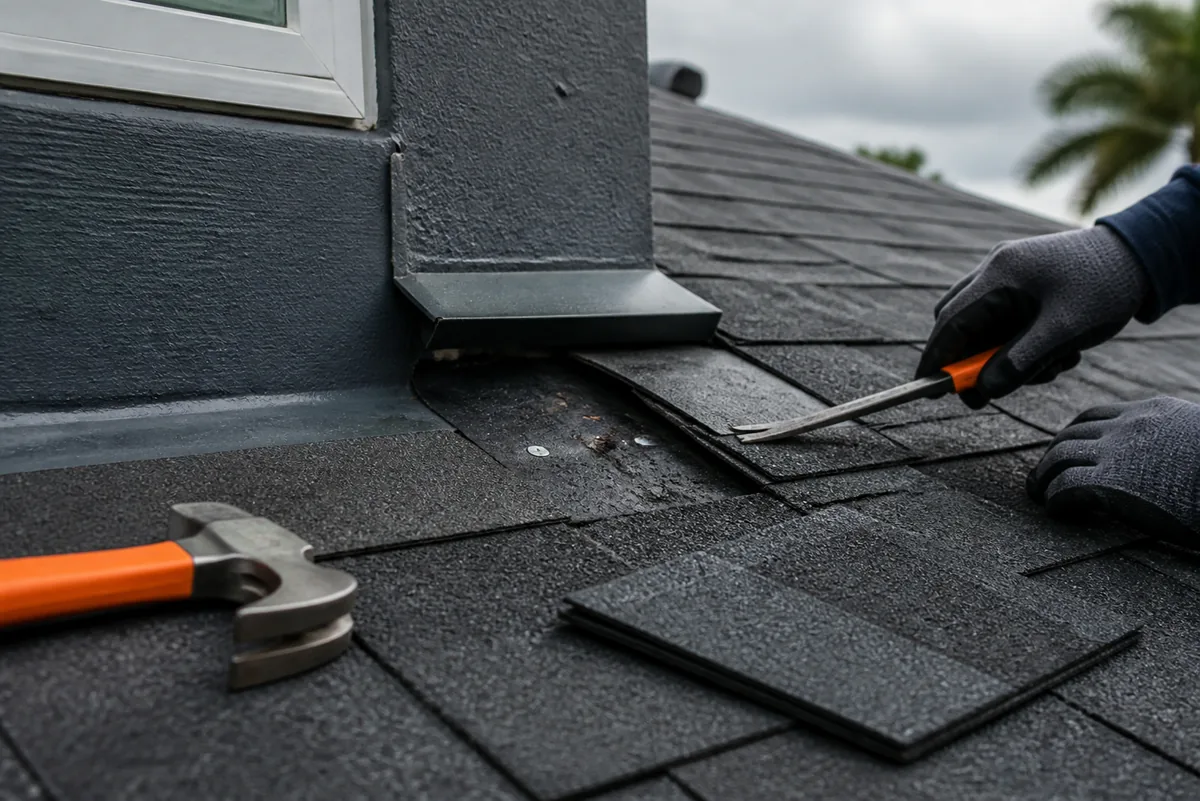
The final scope depends on the roof’s actual condition and safe access—not a list on a website.
Repair is usually the strongest option when the cause is isolated, compatible materials remain available, and the surrounding roof still has useful service life.
Start with the interior symptom and trace likely exterior entry points.
Check the suspected detail and the surrounding roof for connected wear.
Describe the observed cause, the proposed repair, and any limitations.
Complete the agreed scope and review the finished area and next watch points.
If water is entering now, keep people away from sagging ceilings and electrical hazards. Protect belongings only when it is safe. Do not climb onto the roof or enter an attic with wet electrical components. For danger to people, call 911.
Call Storm Force for current emergency tarp or repair availability. Roof access and exterior work begin only when travel and working conditions are safe.
For a broader view of inspection, repair, replacement, and storm options in the area, see Davenport roofing services.
Send the property details and what you can see safely. We’ll follow up about the repair assessment.